
by Samson Mawulolo Ahlijah

Since ancient times, in the dark depths of forgotten ages, human beings have always looked to the sky. This blue vault that covers our little planet Earth has been an object of worship in almost every civilisation, and above all a source of hope. From the sky springs the rain that fertilises the soil and allows the human race to continue to exist. But the sky is also, in all cultures, the abode of ancient gods and a place full of mystery.
Since the famous Roswell crash in the United States, the sky has been scrutinised by thousands of men and women across the Western world. They are on the lookout for strange flying ships from other worlds that have come to visit our own for obscure reasons. From time to time, photos are circulated and singular testimonies, for which no rational explanation is found, lead us to ask questions about the universe in which we evolve. And the question we are often asked is whether our governments, in this case the government of the world’s leading power, are hiding things from us.

To provide some answers to this question, we have decided to open a recently published book that is already shaping up to be a reference on the subject. It is Inside the Pentagon’s Hunt for UFOs by Luis Elizondo. This singular work plunges us into the peculiar world of UAP investigations within the US Department of Defence. As a former insider, Elizondo sheds light on bureaucratic inertia and reluctance to fully acknowledge the phenomenon. True to Western rhetoric, he presents UAPs as a profound mystery and, above all, as an urgent security problem.
The book reveals that the author’s frustration with the system led him to resign. Luis Elizondo sets out to demonstrate that several American institutions often avoid disclosing information to the public because of their inability to explain the phenomena. The author is convinced, although he has no formal proof, that UFOs represent threats that must be taken seriously.
One of the book’s strong points is its meticulous approach to documenting encounters with UAPs. Luis Elizondo willingly wears the hat of a galactic aerospace engineer and explains potential propulsion methods with diagrams and technical detail. He strives to strike a balance between providing sufficient technical information and protecting classified information to support his position and point of view.
Another strong point of the book is its criticism of the American political and military establishment. Elizondo accuses the latter, the true masters of the American deep state, of withholding sensitive information on UFOs from the public and elected representatives (senators and members of the executive). This secrecy is deeply rooted within government agencies, which (according to the author) often regard political leaders as temporary figures. As a result, they do not deserve full access to data. This institutional distrust, he argues, hinders any meaningful oversight or public accountability.
We take two things from Elizondo’s book. The first is that the UFO question continues to be a mystery because certain powerful people in this world want it to be. The second is that the question of UFOs deserves to be approached with the utmost seriousness. Far from being a marginal subject, it touches on the very essence of the existence of the human species as a component of a universe whose laws and limits it is currently unaware of.
By presenting UAPs as a potentially serious national security problem, Elizondo adds urgency to the discourse on government disclosure and transparency. The question is whether UFOs can only be analysed from the angle of a threat to the security of the United States and, by extension, the world. Why would beings living light years away and perhaps capable of travelling through space and time have a grudge against the United States? This human-centred and navel-gazing posture seems to us to be the great trap of modern ufology.
If humanity wants to open up to living extraterrestrials, it must first rid itself of these anachronistic concepts of good and evil inherited from monotheistic religions. We are not good earthlings pitted against bad guys from outer space. We must not forget that morality is a product of time and space. What’s more, what’s the point of trying to judge beings from another space-time continuum using ethical criteria specific to our blue planet?
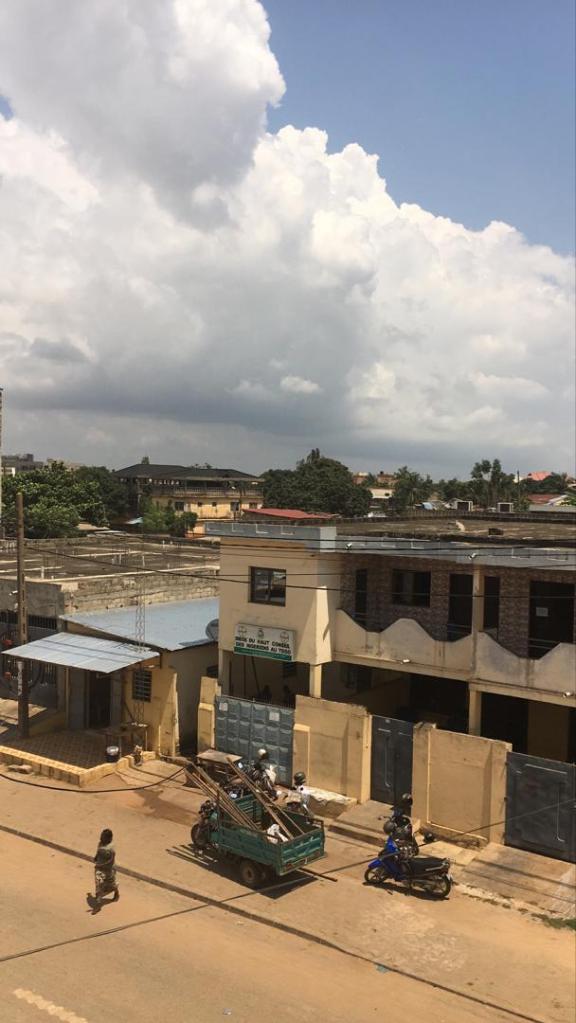
Lomé, Togo
Luis Elizondo undoubtedly provides us with valuable information about the public’s understanding of the US government’s commitment to the subject of UFOs. This understanding, which seems to have taken hold in the Western world, is based on a need for security. In our view, it needs to be counterbalanced by an African vision that analyses the UAP issue from the angle of the birth of universal hospitality, a symbol of new opportunities for humanity.

Samson Mawulolo Ahlijah



 UAP AFRIQUE
Laisser un commentaire